
Late winter can be deceptively dangerous. The snow starts to melt, temperatures climb above freezing during the day, and it feels like the worst of winter is finally behind us. But in reality, this is often when some of the most serious winter hazards appear. Melting snow followed by refreezing temperatures can create conditions that are just as risky—if not more so—than a fresh snowfall.
For property owners, facility managers, HOAs, and businesses across Ohio, late winter is the season to stay especially alert. Ice dams, refreeze hazards, and hidden ice can cause property damage, increase liability risk, and create unsafe conditions for anyone walking or driving on your site. Understanding why these problems happen and how to spot them early is key to preventing costly issues.
Why Melting Snow Can Be More Dangerous Than Falling Snow
Fresh snow is obvious. People expect it, prepare for it, and respond quickly. Melting snow, on the other hand, tends to lower our guard. When snow begins to soften and disappear, many assume the danger has passed. In reality, melting snow introduces new risks that are less visible and often more unpredictable.
During late winter, temperatures frequently fluctuate above and below freezing. Snow melts during the day, water flows into low spots, roof edges, gutters, and pavement cracks, then refreezes overnight. This cycle can repeat for days or even weeks, gradually building dangerous ice in places people don’t expect.
This is when problems escalate—not from accumulation, but from transformation.
Ice Dams: A Silent Threat on Roofs
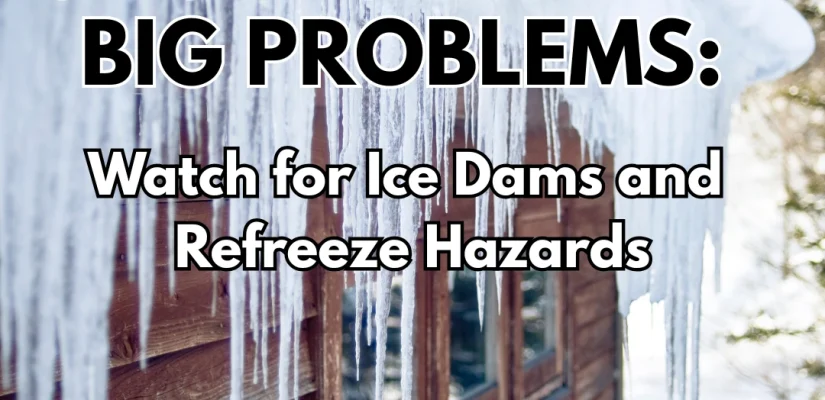
One of the most common late-winter dangers is ice dams. An ice dam forms when snow on a roof melts due to heat escaping from the building or warmer daytime temperatures. The meltwater runs down the roof until it reaches a colder edge or overhang, where it refreezes. Over time, this creates a ridge of ice that traps additional melting water behind it.
That trapped water has nowhere to go.
Instead of draining safely, it can seep under shingles, penetrate flashing, and enter the building envelope. This can lead to ceiling stains, insulation damage, mold growth, and interior leaks—sometimes long after the original snowstorm has passed.
Signs You May Have Ice Dams
Ice dams don’t always announce themselves loudly. Watch for these warning signs:
- Thick ridges of ice along roof edges or gutters
- Icicles forming repeatedly in the same areas
- Water stains on ceilings or walls near exterior walls
- Dripping water during freeze-thaw cycles
- Blocked or overflowing gutters
Once ice dams are fully formed, removal becomes difficult and potentially dangerous. Prevention and early intervention are far more effective than reacting after damage occurs.
Refreeze Hazards: Ice Where You Least Expect It
On the ground, melting snow creates another major issue: refreeze hazards. When snow melts during the day, water flows across pavement, sidewalks, curbs, and entryways. As temperatures drop overnight, that water freezes into smooth, nearly invisible ice.
This type of ice is especially dangerous because it blends in with dark pavement and concrete. People often don’t realize it’s there until they slip.
Common refreeze trouble spots include:
- Sidewalks shaded by buildings or trees
- Parking lot low points and drainage areas
- Building entrances and exit ramps
- Stairways and loading docks
- Areas near downspouts or roof runoff zones
Even properties that were plowed and treated earlier in the season can become hazardous again without any new snowfall. One warm afternoon followed by a cold night is all it takes.
Why Late Winter Increases Liability Risk
From a liability standpoint, late winter can be more complex than mid-season storms. When snow is actively falling, expectations are clearer. When conditions look “mostly clear,” people assume surfaces are safe.
Slip-and-fall incidents caused by refreeze ice are common during this time of year, especially in early mornings and evenings. For businesses and property owners, this creates exposure if walkways, entrances, and parking areas aren’t monitored and maintained consistently through temperature swings.
Late winter also increases the chance of complacency. Crews may be scaled back, response times extended, or inspections reduced. Unfortunately, ice doesn’t care what the calendar says.
How to Reduce Ice Dam and Refreeze Risks
While you can’t control the weather, you can control how prepared your property is for late-winter conditions.
Monitor Temperature Swings Closely
Pay attention not just to snowfall totals, but to daily high and low temperatures. Freeze-thaw cycles are the biggest red flag for refreeze hazards and ice dam formation.
When daytime highs rise above freezing and nighttime lows dip back down, plan for additional inspections and treatments—even if no new snow is forecasted.
Improve Drainage Wherever Possible
Water is the root cause of most late-winter problems. Make sure drainage paths are clear so melting snow has somewhere to go.
- Keep gutters and downspouts clear
- Redirect downspouts away from walkways
- Address low spots where water tends to pool
- Ensure storm drains are not blocked by snow piles
Better drainage reduces the amount of water available to refreeze.
Treat Surfaces Proactively
Late winter is not the time to wait for complaints or visible ice. Proactive treatments during refreeze-prone periods can significantly reduce hazards.
Applying deicing materials in advance of overnight freezes helps prevent water from bonding to surfaces. This is especially important in shaded areas, near entrances, and along high-traffic pedestrian routes.
Don’t Ignore Roof Conditions
Ice dams are easier to manage early. Regular roofline inspections during thaw periods can help catch problems before they lead to interior damage.
If ice buildup is consistent in certain areas, it may indicate insulation or ventilation issues that should be addressed before next winter.
Maintain Consistent Snow and Ice Management Through the End of the Season
One of the biggest mistakes is scaling back snow and ice management too early. Late winter often demands just as much attention—sometimes more—than the peak of the season.
Maintaining service through March and into early spring helps protect both safety and property conditions as snow transitions to water and ice.
Late Winter Is a Test of Preparedness
Melting snow gives the illusion of relief, but it also exposes weaknesses in drainage, maintenance plans, and monitoring routines. Ice dams and refreeze hazards are reminders that winter doesn’t end with the last plowable snowfall.
For Ohio properties, late winter is a critical window. The combination of melting snow, fluctuating temperatures, and reduced vigilance can create serious issues if not addressed intentionally.
At Abraxus Snow, we understand that snow and ice management doesn’t stop when flakes stop falling. Late-winter conditions require experience, attention to detail, and proactive planning. Whether it’s monitoring refreeze risks, managing runoff, or helping protect your property from ice-related damage, staying ahead of these hazards makes all the difference.
Winter may be winding down—but the work of protecting people and property isn’t over yet.